Choosing Age-Appropriate Music Classes for Your Child
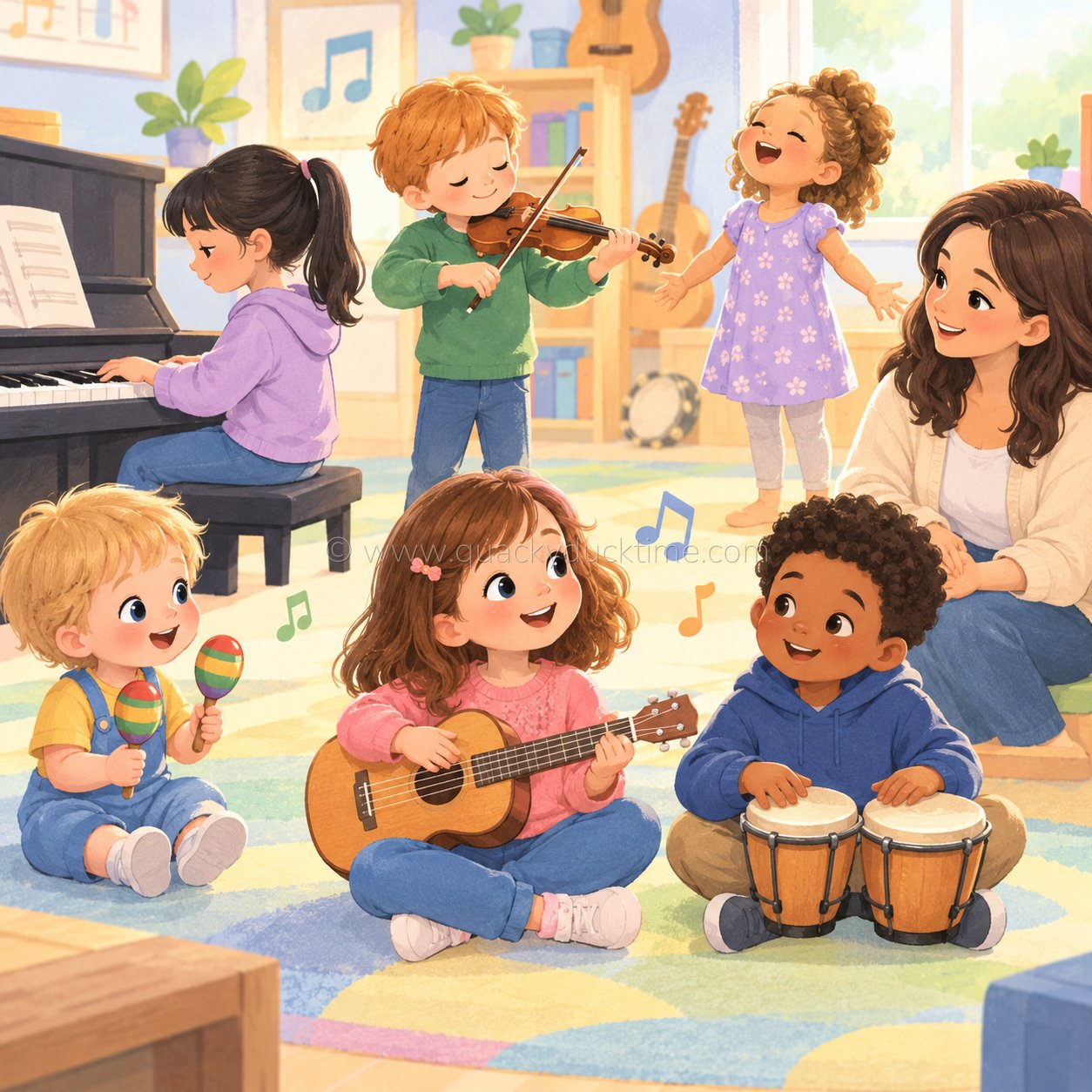
You signed up for the neighborhood music class because the flyer had cute maracas on it. Three weeks later, your toddler is either wailing by the door or trying to conduct the whole room like a tiny orchestra maestro. Sound familiar? Choosing music lessons for toddlers and young kids isn't just about age brackets on a website — it's about matching the class to the actual human (tiny as they are) who has to sit through it.
Here's the good news: early music education is flexible enough to bend around almost any personality, once you know what to look for.
Why Age Matters (But Isn't Everything)
Age gives you a starting point, not the whole answer. A well-run class for 18-month-olds usually leans on repetition, movement, and instant sensory feedback — shakers, drums, bouncing on a caregiver's knee. A class for 4- and 5-year-olds can ask for longer attention spans, turn-taking, and simple call-and-response singing.
General Age Guideposts
- 0-2 years: Parent-and-me classes built on rhythm, touch, and voice, not performance
- 2-3 years: Short structured segments mixed with free movement and simple instruments
- 4-5 years: Group singing, basic rhythm patterns, and early exposure to real instruments
- 6+ years: Instrument-specific lessons or choir-style programs with more structure
But two kids can be the same age and need completely different rooms. That's where personality comes in.
Matching Music Programs to Child Personality Types
Think about how your child already behaves in a birthday party, a library story hour, or even the grocery store. That's your cheat sheet.
The Shy Observer
This child hangs back, watches everything intently, and might not participate for the first three or four sessions — and that's completely normal. Look for classes with a low child-to-teacher ratio, predictable routines, and teachers who don't force participation. Home-based or small-studio settings tend to work better than large drop-in classes for these kids. Give it time; shy kids often absorb far more than they show, then surprise you by humming the whole set list at home.
The Social Butterfly
Loves people, loves noise, thrives on group energy. This child usually does well in larger group classes with lots of interaction — passing instruments around, partner dances, group singing circles. Choose a program that keeps things moving quickly, since these kids can get bored waiting for a turn.
The Physical Mover
Can't sit still, needs to climb, jump, or spin while processing sound. Look for movement-heavy programs (think scarves, ribbons, drums, and dancing) rather than seated singing circles. A teacher who builds in wiggle breaks — or better, builds movement into the whole structure — will get much further with this kid than one who asks for stillness.
The Little Perfectionist
Wants to get it "right" and can get frustrated by open-ended free play. These kids often do surprisingly well with a bit more structure — simple rhythm patterns, clear steps, gentle repetition — paired with a teacher who praises effort over precision. Avoid programs that are too loose and chaotic; it can overwhelm rather than free them.
Questions to Ask Before You Enroll
- Can we observe or trial a class before committing to a full session?
- What's the child-to-teacher ratio, and how many kids are typically in the room?
- How does the teacher handle a child who won't participate or who participates "too much"?
- Is there a mix of structured and free-choice moments in each session?
- What happens during meltdowns or sensory overload — is there a quiet corner or exit plan?
A five-minute trial class tells you more than any glossy brochure. Watch your child's shoulders, not just their smile — relaxed shoulders and curious eyes usually mean you've found a good fit, even if they're not singing along yet.
Signs a Class Isn't the Right Match
- Your child dreads going, week after week, with no improvement by week four or five
- They seem anxious or shut down rather than simply shy
- The pace is so fast or so slow that they check out completely
- You're doing all the enforcing ("sit down, sit down, sit down") instead of the teacher guiding naturally
It's okay to switch. A mismatched class isn't a reflection of your parenting or your child's musical potential — it's just the wrong room for now.
Bringing the Music Home
Whatever class you land on, the real magic happens in the small musical moments outside the classroom — car ride sing-alongs, bath-time humming, dance parties in the living room. That everyday repetition is what actually builds musical memory and comfort in young children, classes or no classes.
If you're looking for cheerful, easy songs to fill those in-between moments, take a spin through Quacky Duck Time's library — playful, singable tunes made for exactly the kind of small humans who are still figuring out whether they want to dance, hide, or lead the whole band.