Building a Bedtime Routine with Calming Kids' Music
If bedtime at your house involves three encore requests for water, a sudden fear of the dark, and a toddler who is somehow wide awake at 8:47pm, you are not alone. The good news? A predictable routine paired with the right calming music can turn that nightly negotiation into something both of you actually look forward to. Let's build one together.
Why Bedtime Routines Matter (and Where Music Fits In)
Kids thrive on predictability. A consistent bedtime routine tells their brain and body, "okay, it's time to slow down," long before their head hits the pillow. Music is one of the most powerful cues you can add to that routine because it's sensory, repeatable, and impossible to rush. You can't fast-forward a lullaby the way you can skip brushing teeth.
When the same calming songs show up every night, in the same order, your child's nervous system starts to associate those sounds with safety and sleep. That association is the whole magic trick — no complicated sleep training required.
How Calming Music Actually Helps Toddlers Wind Down
Little kids are wired to respond strongly to rhythm and tone. Fast-tempo, high-energy songs (think dance party bops) spike alertness — great for car rides, terrible for 7pm. Calming music for kids typically features a slow, steady tempo (close to a resting heart rate), soft instrumentation, and simple, repetitive melodies. This combination helps lower arousal, slow breathing, and quiet the constant chatter of a toddler brain that just does not want to stop today.
Sleep music doesn't have to be silent-and-boring, either. Gentle lullabies with a little warmth and personality actually work better than sterile white noise for many kids, because the familiarity itself becomes soothing.
Building Your Routine, Step by Step
Step 1: Start the Wind-Down 30 Minutes Early
Dim the lights, turn off screens, and put on soft background music while you handle pajamas and teeth-brushing. This isn't the lullaby yet — think of it as the transition soundtrack that signals bedtime is approaching.
Step 2: Pick 2-3 "Anchor" Songs
Choose a small rotation of calming songs and lullabies that become your nightly go-tos. Repetition is the point — the goal is familiarity, not variety. Kids often ask for "the same one again," and that's actually helping the routine work.
Step 3: Keep the Order Consistent
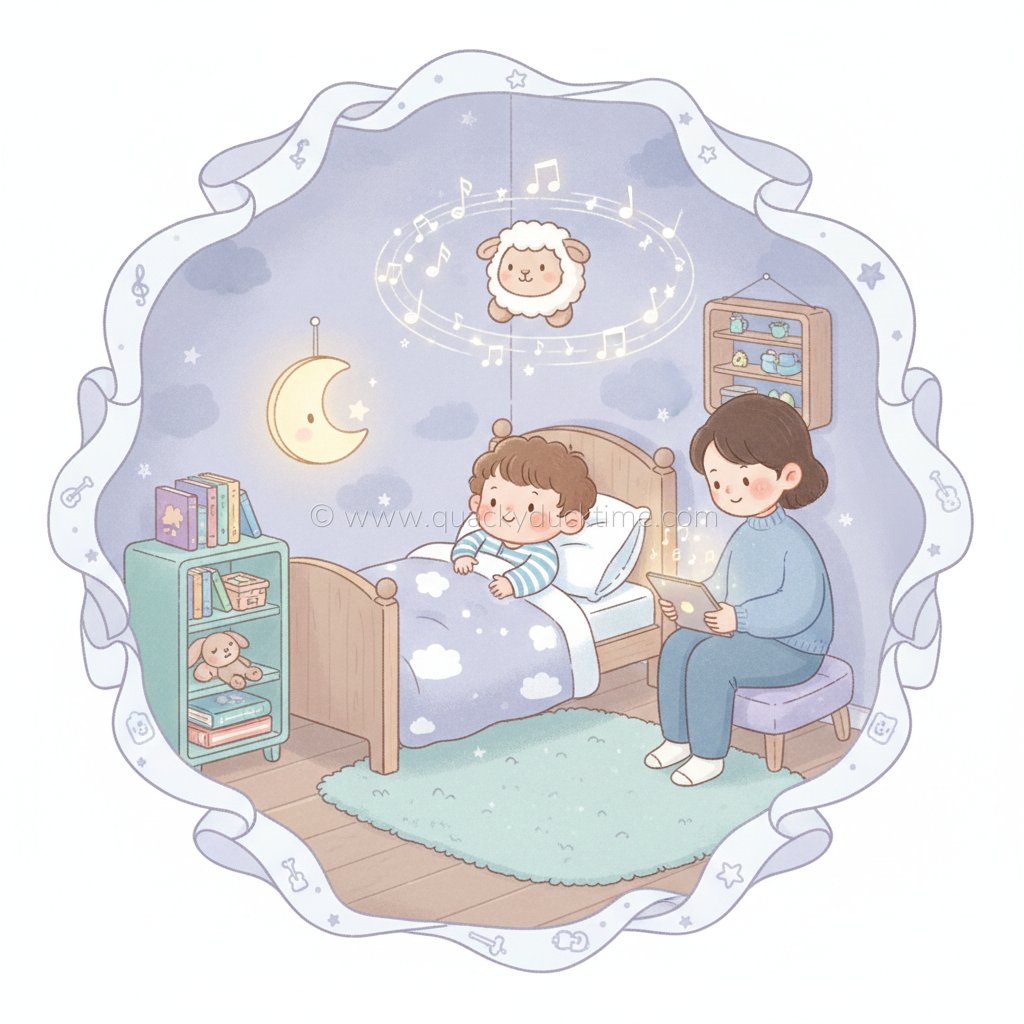
Play your songs in the same sequence each night: one for getting into bed, one for cuddles and story time, and a final quiet lullaby for lights-out. The predictability is doing the heavy lifting here, even more than the songs themselves.
Step 4: Let the Last Song Play as You Leave
Instead of turning music off abruptly, let the final lullaby fade out naturally while you say goodnight and step away. It softens the transition out of the room and gives kids something gentle to focus on instead of your exit.
Choosing the Right Sleep Music and Lullabies
Not all "kids' music" belongs in the bedtime rotation. When picking sleep music, look for:
- Slow, steady tempo — no bouncy beats or sudden tempo changes
- Soft vocals — soothing over shouty, even in playful songs
- Simple melodies — easy for toddlers to hum along and predict
- Short, calm instrumental sections — great for the final fade-out song
- Consistent volume — no jarring loud moments to startle a drowsy child
Classic lullabies work because they're built this way by design, but modern calming kids' music can hit the same notes (literally) while feeling fresh and current for your family.
Toddler Sleep Tips for the Tricky Nights
Even a solid routine hits bumps — travel, teething, or that one day your toddler decided naps were optional. When bedtime gets rocky, resist the urge to overhaul everything. Instead:
- Keep the same anchor songs even if you skip other steps (bath, extra book, etc.)
- Lower your expectations for a "perfect" bedtime and focus on consistency over perfection
- Use the lullaby as the one non-negotiable — it's the anchor point your child can rely on
- Give the new routine at least 1-2 weeks before deciding if it's "working"
Toddlers test boundaries at bedtime because it's developmentally normal, not because your routine failed. The music is there to make the returning-to-calm part easier, every single time.
Ready to Build Your Own Bedtime Soundtrack?
A calming bedtime routine doesn't need to be complicated — just consistent, cozy, and set to the right soundtrack. Quacky Duck Time has a growing collection of gentle lullabies and sleep music made just for little ones. Come explore our songs and find the ones that become your family's new nightly favorites.