Cinderella
— The fairy godmother's magic as a symbol of hope arriving on time
Once upon a time, there lived a kind and gentle girl whose mother had died when she was young. Her father remarried a proud woman with two daughters, every bit as vain and unkind as their mother. From the moment the wedding was over, the stepmother showed her true colors, giving the girl the dirtiest, hardest work in the house while her own daughters lounged in soft beds and silk gowns.
The girl slept on a straw mattress in the attic and spent her evenings by the hearth, raking out ashes and cinders to keep the fire going. Her stepsisters mocked her, calling her Cinderwench — but she was too gentle to answer their unkindness with unkindness of her own. So people began to call her simply Cinderella, for she always seemed dusted in soot from the fireplace, yet somehow, her eyes still shone.
An Invitation to the Ball
One day, grand news swept through the kingdom: the King's son was holding a ball, and every young lady of good family was invited. Cinderella's stepsisters could talk of nothing else. They ordered new gowns, fussed over ribbons, and demanded Cinderella help them dress, curl their hair, and pin their finest jewels in place.
"Would you like to go to the ball, Cinderella?" one stepsister asked with a cruel little laugh.
"Oh, you're only teasing me," Cinderella said softly. "That's not for someone like me."
When the night of the ball arrived, Cinderella watched the carriage rattle away down the road, until the sound of wheels faded into silence. Alone in the kitchen, surrounded by cold ashes, she could not stop the tears that slipped down her cheeks. "I wish," she whispered to the dying fire, "I wish I could go, just once."
A Light in the Kitchen
No sooner had she spoken than the kitchen filled with a soft, golden glow. Standing before her was her fairy godmother, kind-eyed and smiling. "Dry your tears, little one," she said gently. "You shall go to the ball."
"But I have no gown, no carriage—" Cinderella began.
"Fetch me a pumpkin from the garden," said the fairy godmother, "and we shall see what hope can do."
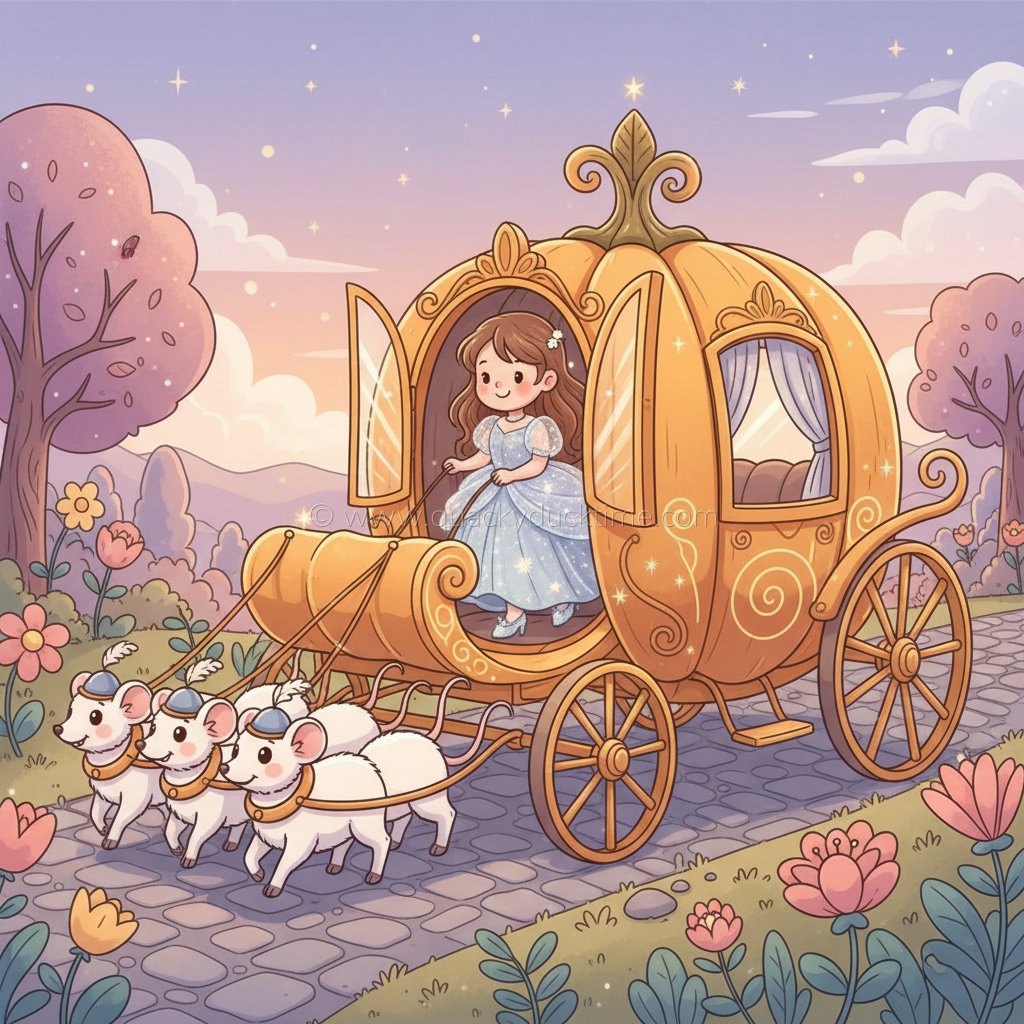
With a tap of her wand, the pumpkin became a gleaming golden coach. Six gray mice from the mousetrap became six dappled horses. A rat became a jolly coachman, and six lizards became footmen in fine livery. Then, with one final wave, Cinderella's ragged dress transformed into a gown of silver and gold, sparkling as though woven from starlight itself — and upon her feet appeared two small glass slippers, the most beautiful shoes she had ever seen.
"Now go, and enjoy yourself," said the fairy godmother, her eyes twinkling with warmth. "But remember — this magic does not last forever. You must leave before the clock strikes twelve, or everything will turn back to what it was before."
"I will remember," Cinderella promised, hardly able to believe the wonder of it all.
The Ball
When Cinderella arrived at the palace, a hush fell over the room. No one recognized the beautiful stranger in shimmering silver, least of all her own stepsisters, who curtsied to her without the faintest idea who she was. The Prince himself could not take his eyes off her, and they danced together all evening, laughing, spinning beneath the glittering chandeliers.
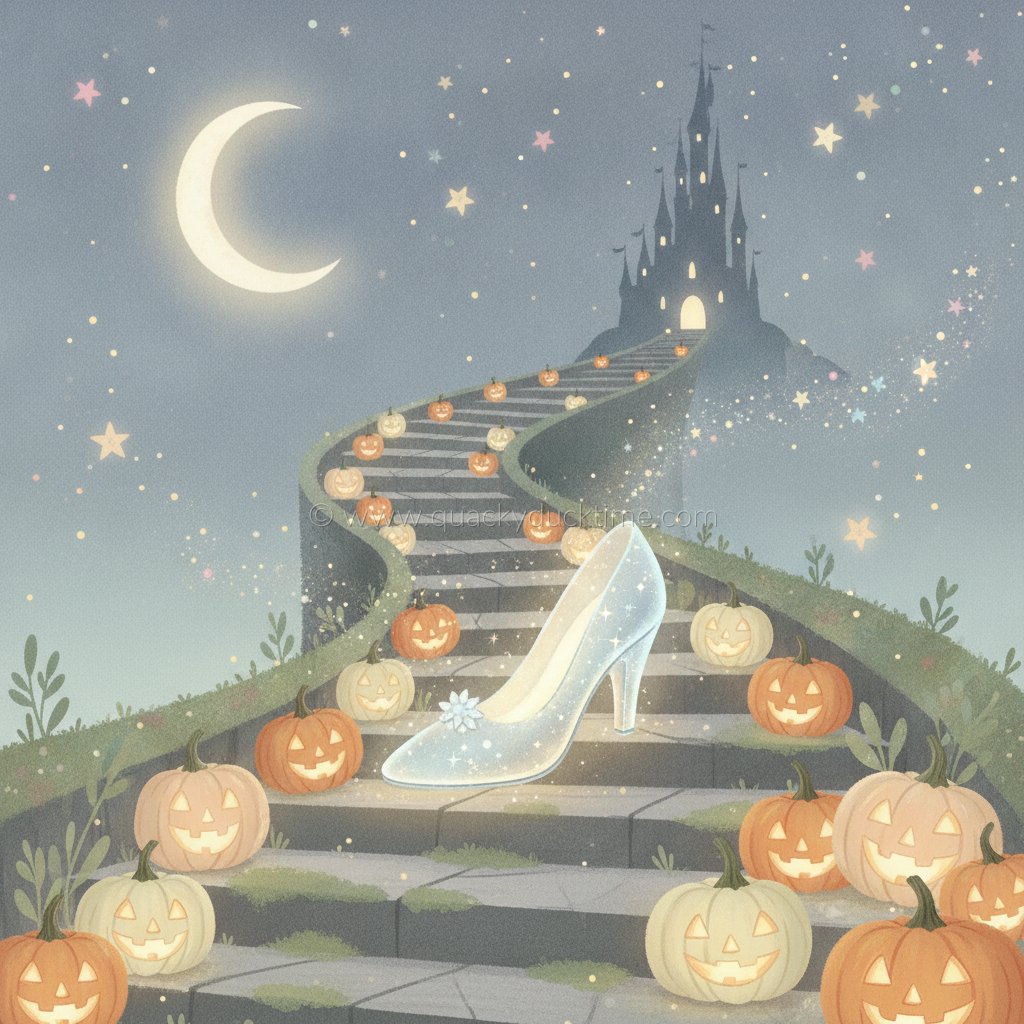
Cinderella was having such a wonderful time that she nearly forgot the fairy godmother's warning. But just as the great clock began to strike the first note of midnight, she remembered. She fled down the palace steps so quickly that one glass slipper slipped from her foot and was left behind, sparkling on the stairs.
By the time she reached home, her gown had turned back to rags, the coach was a pumpkin once more, and the horses were mice scurrying into the shadows. All that remained of the magic was the single glass slipper still in her pocket — proof that the wonder of that night had truly happened.
The Search
The Prince, determined to find the mysterious girl who had captured his heart, sent his men throughout the kingdom to try the glass slipper on every young woman's foot. When they arrived at Cinderella's house, her stepsisters squeezed and pushed, but the slipper would not fit no matter how hard they tried.
"Might I try?" Cinderella asked quietly.
Her stepsisters laughed, but the Prince's men allowed her to sit. The glass slipper slid onto her foot as if it had been made for her alone — because it had been. And when she drew the matching slipper from her pocket, there was no more doubt at all.
Cinderella was brought before the Prince, who recognized her at once as his partner from the ball. She married him soon after, and true to her gentle heart, she forgave her stepsisters and welcomed them warmly into her new life at the palace.
Even in the ashes of an unkind house, hope had not been forgotten — it had only been waiting for the right moment, and the right little bit of magic, to shine through.
Attribution: Adapted from Charles Perrault, Contes de ma Mère l'Oye (1697) — public domain.