Cinderella
— Cinderella's inner resilience: kindness that cruelty couldn't crush

Once, in a house that should have felt warm but never quite did, there lived a girl who was kinder than anyone had a right to be, given how she was treated. Her name was Cinderella — though that wasn't the name her father had given her. That name came later, from her stepmother and stepsisters, because she was always dusted with ashes from tending the fire.
Her own mother had died when she was young, and though her father remarried, hoping to give her a new family, the new stepmother turned out to have a heart as cold as the stone floors Cinderella scrubbed every day. Her two stepsisters were just as unkind, preening in front of mirrors while Cinderella patched their gowns and swept their crumbs.
A Heart That Stayed Soft
Here is the remarkable thing about Cinderella: she never let their cruelty turn her bitter. She could have grumbled. She could have slammed doors or snapped back. Instead, when her chores were finished, she would sit quietly by the fireplace among the warm ashes — which is exactly where her cruel nickname came from — and let herself dream a little.
She dreamed not of revenge, but simply of being seen — of a moment where someone might look at her and notice the person underneath the soot and the worn-out dress. She kept her chin up. She kept her voice gentle. She kept helping, even the sisters who mocked her, because that was simply who she was.
The Invitation
One day a grand invitation arrived from the palace: the King's son was holding a ball, and every young lady in the land was invited to attend. The stepsisters nearly fainted with joy, immediately demanding new ribbons, new gloves, new everything.
"Cinderella, do my hair properly this time," one sister ordered.
"And mind you don't smudge my gown with your sooty fingers," said the other.
Cinderella brushed their hair and laced their gowns with the same careful patience she gave to everything. When one sister sneered, "You? Go to the ball? Don't be ridiculous, look at you," Cinderella simply lowered her eyes and said nothing back. But that night, after the carriage rattled away down the road without her, she allowed herself to sit by the cold hearth and cry — not loudly, not for pity, just quietly, the way people cry when they've been patient for a very long time.
A Visitor in the Ashes
It was in that very moment of quiet sadness that something extraordinary happened — but that is a part of the story you may already know, so let us instead notice what came before the magic: a girl who, even at her lowest, hadn't let unkindness make her unkind in return. That gentleness was hers alone, and no one — not her stepmother, not her stepsisters — could take it from her.
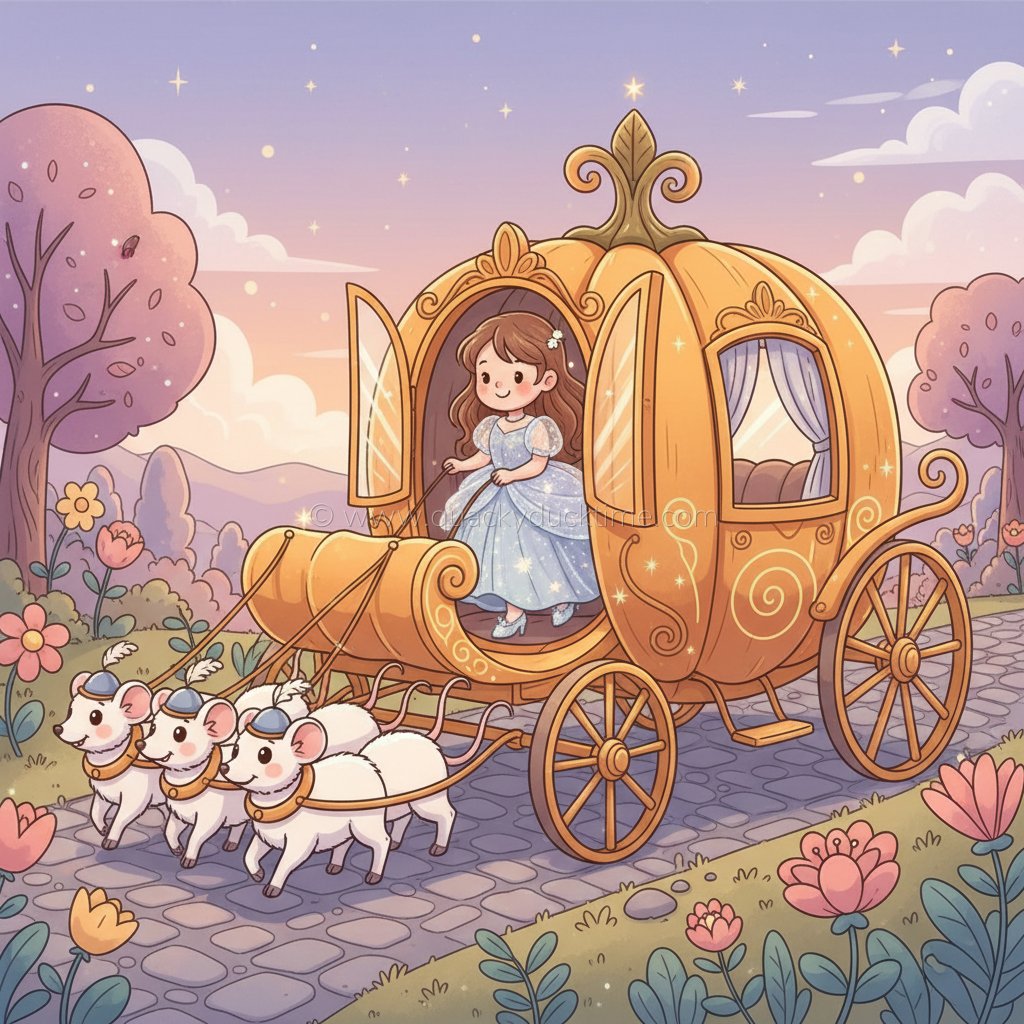
With help she did not expect, Cinderella went to the ball that night in a gown of shimmering beauty, arriving in a carriage fit for a princess. She danced with the Prince, who was utterly charmed — not just by her beauty, but by her warmth, the way she spoke kindly to everyone in the room, servants and nobles alike.
But when the clock began to strike midnight, Cinderella remembered the one promise she'd been given: that the magic would not last forever. She fled down the palace steps in such a hurry that she left behind a single glass slipper on the staircase.
Known, At Last
The Prince searched the entire kingdom for the girl whose foot fit that slipper, and when at last he found his way to Cinderella's house, her stepsisters pushed and squeezed their feet, desperate for it to fit. It did not.
Then the Prince noticed the girl in ashes standing quietly by the fire — the one no one had thought to introduce. He asked to see if the slipper might fit her too. Of course, it fit perfectly.
And here is the heart of it: after everything — the chores, the unkindness, the nights spent alone by the hearth — Cinderella did not gloat, and she did not seek revenge. She forgave her stepsisters and welcomed them warmly into her new life as a princess. Her gentle heart, which had never hardened even in the coldest of days, had been her true strength all along.
Moral / Lesson: Kindness is not weakness — it is a quiet kind of courage. Even when the world is unfair, the way we choose to treat others is always ours to decide.
Attribution: Adapted from Charles Perrault, Cendrillon (Cinderella), Histoires ou contes du temps passé, 1697 — public domain.