Hansel and Gretel
— The gingerbread house as a lesson in looking past sweetness
Once, at the edge of a great forest, there lived a poor woodcutter with his two children, Hansel and Gretel. Times were hard, and there was barely enough bread to fill their little stomachs. One dreadful day, the children found themselves left alone deep in the woods, with only breadcrumbs to mark their path home — and even those had been eaten by the birds.
Lost Among the Trees
Hansel and Gretel walked and walked, hand in hand, as the forest grew darker and stranger around them. The trees stood so tall and close that the moonlight could barely find a way through the branches. Gretel's feet ached. Hansel's stomach growled so loudly he was sure the owls could hear it.
"Don't worry, Gretel," Hansel said, though his own voice trembled just a little. "We will find our way somehow."
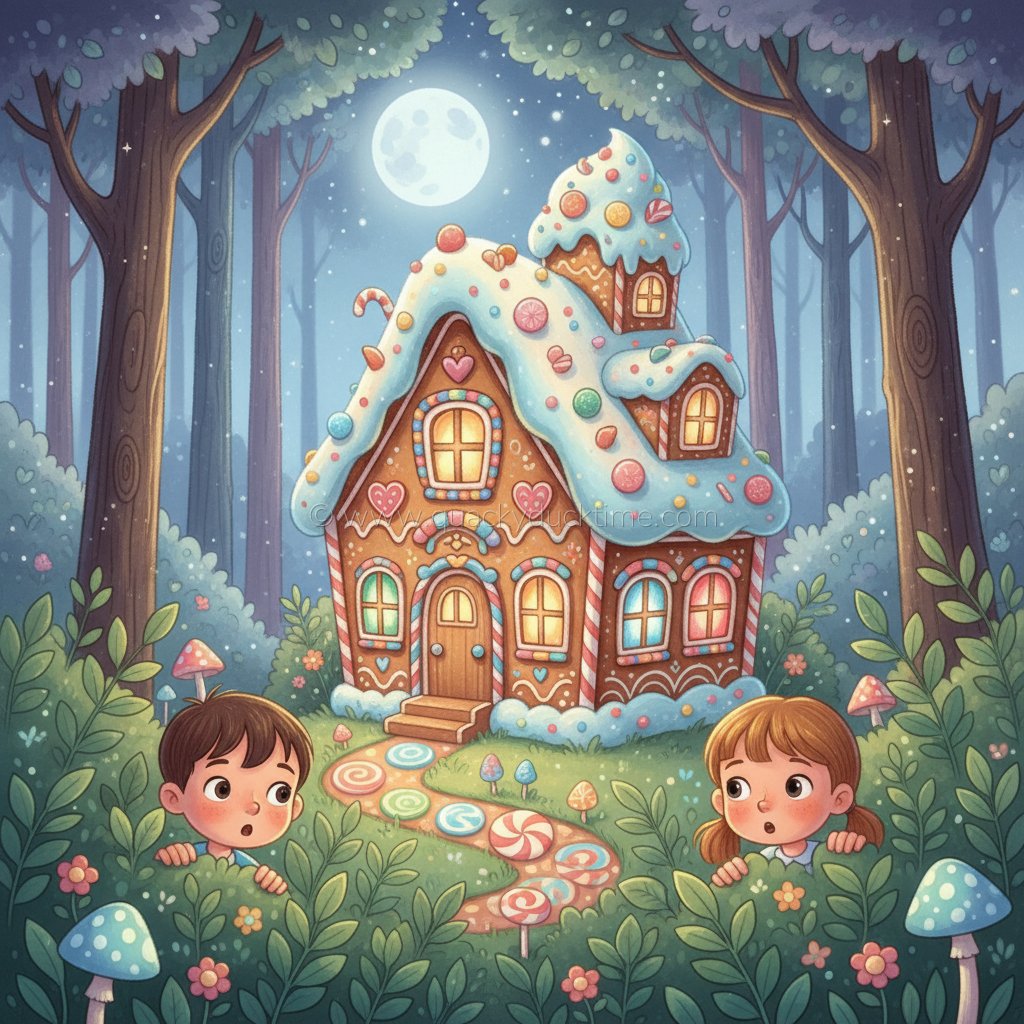
Just when they thought they could walk no further, a smell drifted through the trees — warm, sugary, buttery. It smelled like Sunday mornings and birthday cakes all at once. They followed their noses through a thicket of bushes, and there, in a little clearing, stood the most astonishing sight either child had ever seen.
A House Too Sweet to Be True
The little house glittered in the moonlight. Its walls were made of gingerbread, its roof tiled with slabs of cake, and its windows were panes of clear, spun sugar. Vines of licorice curled along the fence, and the chimney puffed the smell of fresh bread into the night air.
"Look, Gretel!" Hansel gasped, already snapping off a piece of the roof. "It's real! It tastes just as good as it smells!"
Gretel reached up and carefully broke off a piece of a sugar-pane window, letting it melt sweetly on her tongue. For the first time since they'd entered the forest, both children laughed, filling their empty stomachs at last.
They did not stop to wonder why such a wonderful house stood all alone in such a lonely place, or why nothing in nature is ever quite this perfect without a reason. Sweetness, after all, has a way of making children forget to be careful.
The Voice Behind the Door
Just as Hansel reached for another bite, a thin, creaking voice floated out from inside the house:
"Nibble, nibble, little mouse, who is nibbling at my house?"
The children stopped mid-bite. Gretel's hand found Hansel's. The door of the little house creaked slowly open, and out hobbled a bent old woman leaning on a cane, her smile stretching a bit too wide, her eyes glinting a bit too sharp.
"Ah, you sweet dears," she cackled softly. "Come in, come in — you must be hungry, hungry, hungry."
She was not, as it turned out, the kindly old grandmother she pretended to be. She was a wicked witch who had built her house from cake and candy for the very purpose of luring hungry children close — for witches, it happens, have a taste for children even sweeter than gingerbread.
Hansel and Gretel would need every ounce of their courage and their cleverness in the days that followed, to outsmart the witch who had tricked them so sweetly. But that is a story of bravery all its own.
Lesson: The most tempting things are not always the safest — a sweet face, a sweet smell, or a sweet house can sometimes hide something far less kind. It pays to look twice before we leap toward what glitters.
Attribution: Adapted from The Brothers Grimm, Kinder- und Hausmärchen (1812) — public domain.