How Rhythm Games Boost Toddler Math Skills
If you've ever caught your toddler banging a wooden spoon on a pot in perfect (or not-so-perfect) time, congratulations — you're witnessing a tiny mathematician at work. Rhythm isn't just about music, it's about numbers, patterns, and order, and it turns out that a good beat can teach your little one more about math than a flashcard ever could. Let's dig into why rhythm games and toddler math skills go together like peanut butter and jelly.
Why Rhythm Is Secretly Math in Disguise
Music and learning have been linked for decades, but rhythm specifically is where the math magic happens. A steady beat is really just a repeating pattern — one, two, one, two — and recognizing patterns is one of the very first math skills toddlers need to build. When your child claps along to a song, they're practicing counting, timing, and sequencing all at once, without ever knowing they're doing "math."
Think of rhythm as math you can dance to. Every drumbeat, every clap, every pause is a lesson in quantity and order, dressed up as pure fun.
The Big Three Math Skills Hiding in Rhythm Games
1. Counting and One-to-One Correspondence
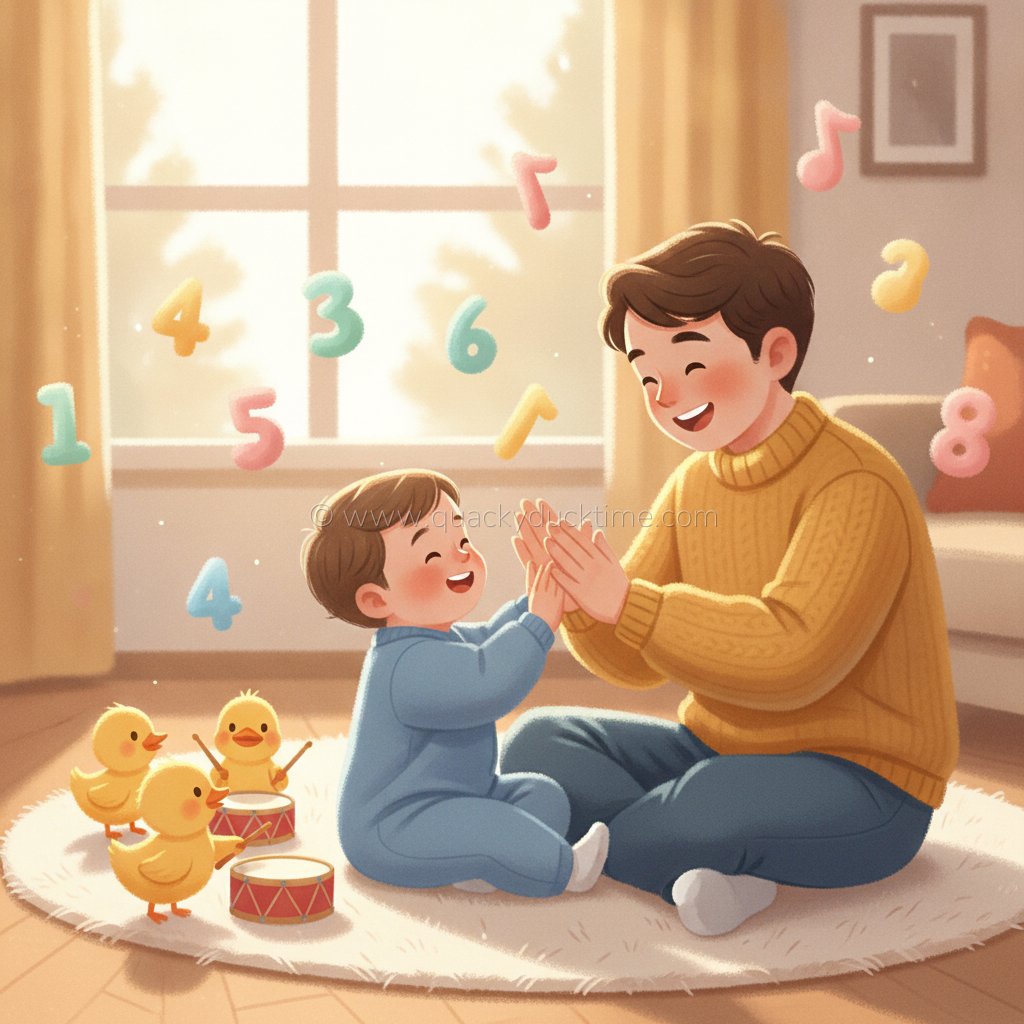
When toddlers tap a drum four times while singing "1, 2, 3, 4," they're practicing one-to-one correspondence — the idea that each number corresponds to one object or action. This is a foundational early childhood education concept that shows up again and again in preschool math lessons.
2. Pattern Recognition
Musical patterns — like clap-clap-stomp, clap-clap-stomp — teach toddlers to predict what comes next. This exact skill (predicting and completing patterns) is a staple of kindergarten math curriculums, showing up in everything from shape sequences to number lines.
3. Sequencing and Order
Songs have a beginning, middle, and end, just like a math problem or a set of instructions. Following a rhythm game from start to finish helps toddlers understand order and sequence, which later supports skills like counting in order or following multi-step problems.
Simple Rhythm Games You Can Play at Home
- Copy-Cat Clapping: Clap a simple pattern (like clap-clap-pause) and have your toddler copy it. Increase the difficulty as they get the hang of it.
- Freeze Dance Counting: Play music and count out loud together, then freeze on a specific number.
- Pot-and-Pan Percussion: Let your toddler bang along to a steady beat while you count each hit out loud.
- Body Percussion Patterns: Create patterns using claps, stomps, and pats — a fantastic hands-on way to explore musical patterns and sequencing.
None of these require special equipment or musical training — just a willingness to be a little silly and repeat things a lot (toddlers love repetition, and repetition is where the learning sticks).
Why Music-Based Learning Works So Well for Little Ones
Toddlers aren't exactly known for sitting still through a worksheet, and that's okay — they're not supposed to. Their brains are wired for movement, sound, and play. Rhythm games check all three boxes, which is exactly why music and learning are such natural partners in early childhood education.
Rhythmic play also builds working memory (remembering the pattern), gross motor coordination (clapping or stomping on beat), and listening skills — all of which support later academic learning, math included. Plus, because it's wrapped in a song, toddlers don't experience it as "work." They just think it's fun. And when learning feels like fun, it sticks.
Bringing Rhythm and Math Together Every Day
You don't need a music degree or a stack of educational toys to raise a rhythm-loving, pattern-spotting toddler. A few minutes of clapping, counting, and singing together during bath time, car rides, or right before bed can build a strong foundation for toddler math skills — one beat at a time.
The best part? These moments double as bonding time. You're not just teaching math, you're creating shared giggles and memories that your toddler will (eventually) look back on fondly, even if they don't remember the actual counting part.
Let's Get Those Little Feet Tapping
Rhythm really is one of the sneakiest, most joyful ways to build early math skills in toddlers. So next time your little one is banging on pots or bouncing to a beat, know that something wonderful is happening upstairs. Ready to add some catchy, pattern-packed tunes to your daily routine? Come explore Quacky Duck Time's playful songs, designed to get little bodies moving and little brains growing — one beat at a time.