Classic Nursery Rhymes and the Hidden Stories Behind Them
— Historical and cultural mysteries hiding inside beloved nursery rhymes
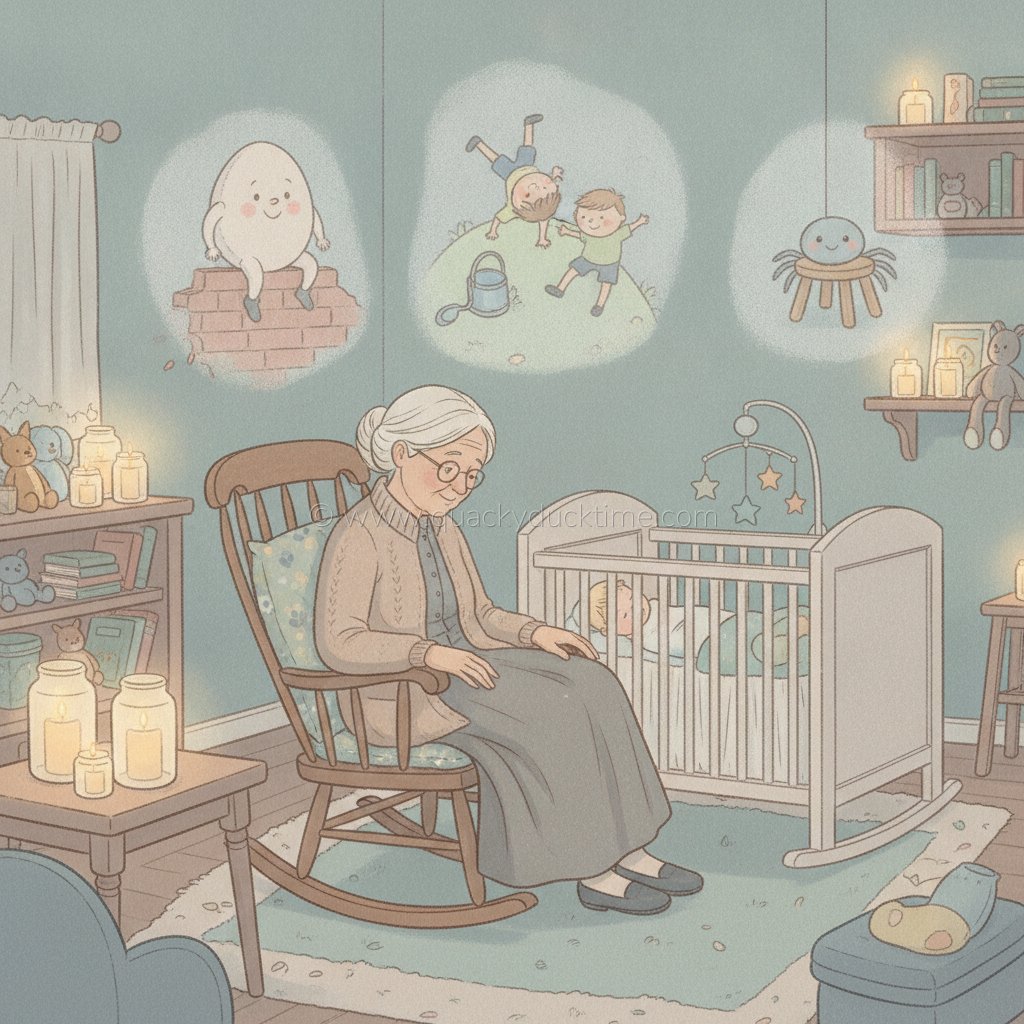
Long, long ago, before children had picture books or television or cozy story apps, mothers and grandmothers and nursemaids sang little songs to rock babies to sleep. Bigger children clapped their hands to these songs in the street, or skipped rope, or bounced balls in time with the words. We call these little songs nursery rhymes, and many of them are so old that nobody remembers who made them up at all!
But here is a secret: almost every nursery rhyme is hiding something. A tiny whisper of history. A puzzle. A story behind the story. Let's tiptoe back through time and uncover a few of them together.
Humpty Dumpty's Great Fall
You know this rhyme well:
"Humpty Dumpty sat on a wall,
Humpty Dumpty had a great fall.
All the King's horses and all the King's men,
Couldn't put Humpty together again."
Here is the curious part — the rhyme never once says Humpty Dumpty is an egg! For hundreds of years, riddle-lovers in England used "Humpty Dumpty" as a funny name for a short, round little fellow. It became a favorite riddle: once he falls, no one — not even the King's whole army — can ever mend him again. Over time, children and grown-ups alike loved to imagine him as a great egg wobbling on a wall, and that is the Humpty Dumpty we picture today.
Jack and Jill's Tumble
"Jack and Jill went up the hill,
To fetch a pail of water.
Jack fell down and broke his crown,
And Jill came tumbling after."
This little rhyme has been sung by English children for hundreds of years. It tells a simple, funny story — two children sent to fetch water, and both of them tumbling down the hill together. Grown-ups have long wondered why Jack "broke his crown" (which simply meant he bumped his head!) and some old storybooks even added extra verses about Jack mending his head with vinegar and brown paper. However it began, the rhyme has stayed exactly the same for children to giggle over, generation after generation.
The Mystery of Ring a Ring o' Roses
"Ring a ring o' roses,
A pocket full of posies,
Atishoo! Atishoo!
We all fall down."
Children have played this as a circle game for a very long time, joining hands, spinning round and round, and then all tumbling down together at the end with a laugh. It is a joyful, giggly rhyme — the kind that makes a whole playground of children fall into a happy heap on the grass. Its true beginnings are lost to time, like the beginnings of so many rhymes, but that has never stopped children from singing it with delight.
Hey Diddle Diddle and the Dish That Ran Away
"Hey diddle diddle, the cat and the fiddle,
The cow jumped over the moon,
The little dog laughed to see such sport,
And the dish ran away with the spoon."
Perhaps no rhyme is sillier than this one — a fiddling cat, a moon-jumping cow, and a dish running off with a spoon! Nobody truly knows why these particular pictures were strung together, but that is part of its charm. It has delighted children for centuries simply because it makes absolutely no sense at all, and sometimes, that is exactly what a rhyme is for.
Little Miss Muffet's Fright
"Little Miss Muffet sat on a tuffet,
Eating her curds and whey.
Along came a spider,
Who sat down beside her,
And frightened Miss Muffet away."
Here is a rhyme every child understands — the sudden fright of a tiny spider appearing where you least expect it! A "tuffet" was simply an old word for a little stool or grassy mound. Miss Muffet's curds and whey were an old-fashioned, cheesy sort of pudding. Simple words, a simple fright, and a rhyme that has made children laugh in sympathy for hundreds of years.
Isn't it wonderful to think that when you sing these little rhymes today, you are singing the very same words that children sang hundreds of years ago — in cottages, on ships, in schoolyards, across oceans and centuries? Every time you hum one, you are joining hands with countless children who came before you.
Attribution: Adapted from traditional English nursery rhymes, collected in early works such as Mother Goose's Melody (circa 1765) and passed down through oral folk tradition — public domain.