Sensory Music Bins: Tactile Play Meets Sound Exploration
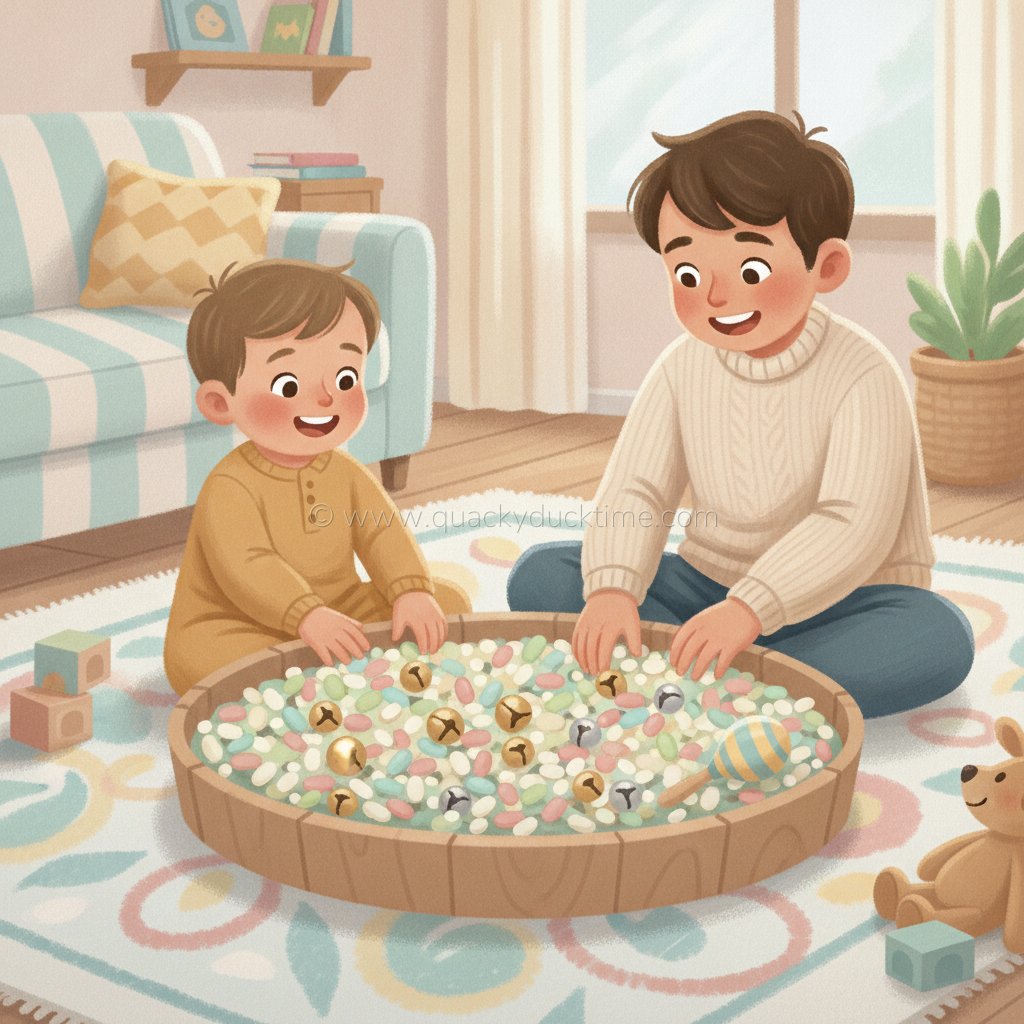
If your toddler has ever banged a wooden spoon on every surface in your kitchen, congratulations — you already have a budding sound scientist on your hands. Sensory music bins take that natural instinct and give it a cozy, contained home. Part sensory play, part mini music studio, these bins let kids dig their fingers into rice, beans, or pom-poms while discovering that squishing, shaking, and tapping all make different sounds. It's messy, it's joyful, and it's secretly packed with developmental benefits.
What Exactly Is a Sensory Music Bin?
Think of a sensory music bin as a shallow container filled with a tactile base — like dried lentils, water beads, or shredded paper — plus a handful of sound-making objects hidden inside. Kids scoop, pour, and search with their hands, and every discovery comes with a noise: a jingle, a rattle, a soft thud. It's the marriage of two favorite kid activities: getting messy and making noise.
Unlike a typical sensory bin, the goal here isn't just texture exploration — it's music sensory bins that ask kids to notice pitch, rhythm, and volume while their hands are busy. A bell buried in flour sounds different than a bell resting on top of pasta shells. That contrast is where the real learning happens.
Why Combining Touch and Sound Matters for Development
Early childhood development thrives on layered sensory input. When a child touches something while simultaneously hearing a sound, their brain builds stronger, more complex neural connections than with a single-sense activity alone. This is tactile learning at its best — hands leading the way toward auditory awareness.
Fine Motor Skills
Pinching small jingle bells out of a bin of split peas, or squeezing a squeaky toy buried in kinetic sand, strengthens the same hand muscles kids will later use for buttoning shirts and holding pencils.
Language and Descriptive Vocabulary
Sensory bins are a goldmine for new words: crunchy, jingly, smooth, bumpy, loud, soft. Narrating what your child feels and hears naturally expands their vocabulary without a single flashcard.
Cause and Effect Understanding
Shake a maraca hidden in shredded paper, and it rattles. Drop it, and it thuds. Kids quickly learn that their actions directly change the sound — an early lesson in physics dressed up as play.
Building Your Own DIY Sensory Music Bin
You don't need a fancy craft closet for this. Most of what you need is probably already in your pantry or junk drawer.
Choose a Base
- Dry rice or beans (dyed with food coloring for extra visual pop)
- Water beads for a squishy, cool sensation
- Shredded paper or fabric scraps for a rustling texture
- Dried pasta shapes for a satisfying clatter
Add Sound-Making Treasures
- Jingle bells or sleigh bells
- Small maracas or homemade shaker eggs (fill plastic eggs with rice)
- Metal spoons, whisks, or measuring cups for tapping
- Squeaky dog toys (surprisingly great for babies!)
- Small drums or upside-down bowls to bury half-hidden
Bring in Tools
Scoops, tongs, and small rakes let toddlers "excavate" the bin like little archaeologists, adding a fine motor challenge on top of the sensory and musical exploration.
Playful Ways to Use the Bin
Sound Scavenger Hunt
Call out an instrument — "find the bell!" — and let your child dig until they locate it by feel and sound alone. This builds listening focus and patience.
Loud vs. Quiet Sorting
Ask your child to find something that makes a loud sound and something that makes a quiet one. This simple sorting game introduces the concept of dynamics in music long before they know the word "dynamics."
Rhythm Along with a Song
Play one of your family's favorite tunes and encourage your little one to shake, tap, or stir the bin in time with the beat. Songs with a steady, predictable rhythm work best for this — think simple, upbeat kids' tracks that make it easy to feel the pulse.
Freeze Dance, Bin Edition
Pause the music randomly and challenge your child to freeze mid-scoop. It's silly, it's giggly, and it sneaks in some serious impulse-control practice.
A Few Gentle Reminders
Always supervise sensory bin play, especially with kids under three, since small items like bells and beads are choking hazards. Lay a shower curtain or old sheet underneath to make cleanup painless, and rotate your bin's contents every week or two to keep curiosity fresh — new textures and new sounds mean new discoveries every time.
Sensory music bins are proof that some of the richest early learning happens in the messiest, most playful moments. So grab a bin, raid your pantry, and let your little one's hands and ears explore together. And when you need the perfect soundtrack for shaking, tapping, and dancing along, come explore the joyful, sing-along songs over at Quacky Duck Time — your new favorite background music for sensory play afternoons.