The Ugly Duckling
— The emotional ache of loneliness and the sudden joy of belonging
Once, on a warm summer day, a mother duck sat on her nest in a quiet corner of the farmyard, waiting for her eggs to hatch. Crack by crack, fluffy yellow ducklings peeped their way into the world, blinking at the sunshine. But one egg — the biggest of them all — took its time.
When it finally cracked open, out tumbled a duckling unlike his brothers and sisters. He was big and gray, with awkward legs and a long neck that didn't seem to fit. "Goodness," said his mother, tilting her head, "he doesn't look like the others at all."
Not Like the Others
In the farmyard, the other ducks and hens noticed right away. "What an ugly duckling!" one hen clucked loudly. His own brothers and sisters nipped at him and pushed him aside. "Go away, you don't belong with us," they said.
The poor duckling didn't understand. He hadn't done anything wrong — he simply looked different. But being different, in that little farmyard, felt like being unwanted. Every day brought new unkind words, until his heart grew heavy with sadness.
One evening, unable to bear it any longer, he slipped away through a gap in the fence and out into the wide, unfamiliar world.
Alone in the Cold
The world outside was vast and lonely. The duckling wandered through marshes and meadows, past ponds where wild ducks lived. "You're much too ugly to stay here," they told him, and chased him off. Even the animals he met in a small cottage, a cat and a hen, told him he was strange for wanting to swim and dive — things they thought were silly.
So he kept moving, alone, as summer faded into autumn, and autumn into a bitter winter. Snow fell heavy and silent. Ice crept across the ponds. The duckling grew thin and tired, huddling in the frozen reeds, watching flocks of birds fly overhead in perfect formation while he stayed hidden, sure that he would never belong anywhere.
There were nights he wondered if anyone in the whole world could ever love a creature as strange-looking as him. He watched the frost settle on the water and felt as frozen inside as the pond itself.
A Warmth Returns
But winter cannot last forever. Slowly, the sun grew warmer. The ice began to crack and melt, and green shoots pushed up through the soft earth. The duckling, thin but alive, felt something stir in his chest — not quite hope, but close to it.
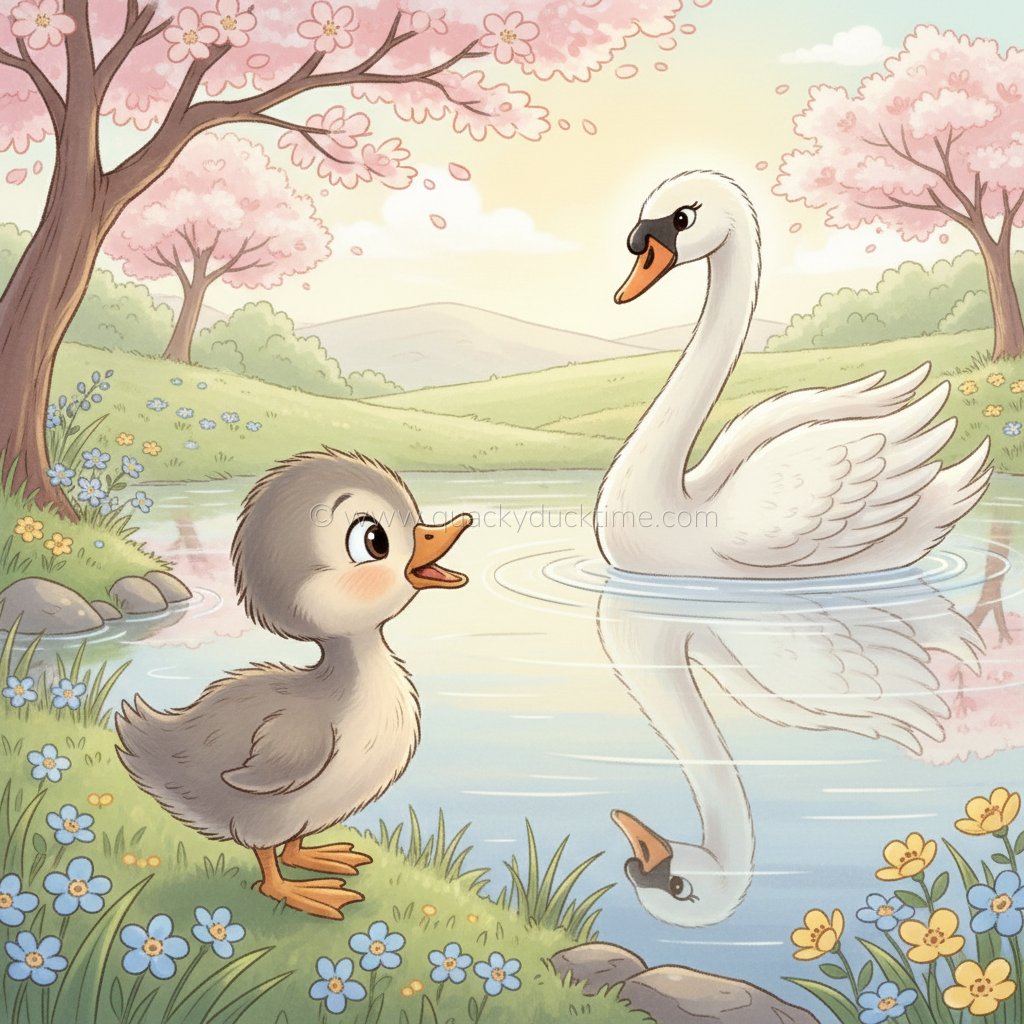
One morning, gliding across the sparkling water, he saw them: three magnificent white birds with long, graceful necks, gleaming in the sunlight. His breath caught. He had never seen anything so beautiful. Something deep inside him longed to be near them, even though he was certain they, too, would turn him away.
"I will go to them," he thought, his heart pounding, "even if they laugh at me. It is better to be hurt by beautiful creatures than to live this lonely life forever."
He paddled toward them, bracing himself for cruelty. But as he lowered his head in fear, he caught sight of his own reflection in the still water below — and gasped. He was no longer a gray, awkward little bird. He had become a swan, as radiant and graceful as the very creatures he had been so afraid to approach.
The swans swam close and dipped their heads in welcome. Children playing nearby pointed and cried out, "Look! A new swan — and he is the most beautiful of them all!"
For the first time in his life, the duckling — now truly a swan — did not feel alone. The ache of all those cold, lonely nights melted away, replaced by a warm, quiet joy that settled deep in his heart. He had spent so long believing he didn't belong anywhere, when all along, he simply hadn't found where he was meant to be.
Even the loneliest winter can lead to the warmest spring — and sometimes, the place we belong is closer than we think.
Attribution: Adapted from Hans Christian Andersen's "The Ugly Duckling" (1843) — public domain.